





Set Screws for Shaft Locking and Precision Positioning
Specification Overview
| Item | Options |
|---|---|
| Product | set screws / grub screws |
| Drive Type | Hex socket, Allen drive |
| Point Style | Cup point, flat point, dog point, cone point, nylon tip |
| Material | Carbon steel, 304 stainless steel, 316 stainless steel, alloy steel |
| Surface Finish | Black oxide, zinc-plated, stainless natural finish |
| Size Range | Metric M1.4‑M12, partial inch sizes, custom per drawing |
| Main Function | Shaft locking, gear positioning, coupling fixation |

How to Select set screws by Application
The most important step when selecting set screws is choosing the correct point style. The wrong tip will cause slipping, shaft damage or insufficient locking force, even if the thread size matches.
Cup point set screws
Cup point versions are the most common choice for anti‑rotation locking. The concave tip creates a small indentation on the shaft surface, helping prevent the screw from slipping under torque or vibration. They are widely used for pulleys, gears, couplings and transmission components.
Flat point set screws
Flat point set screws are suitable for temporary positioning or applications where the shaft must not receive deep indentation. They provide more uniform pressure but are less effective than cup point under high torque or continuous vibration.
Dog point set screws
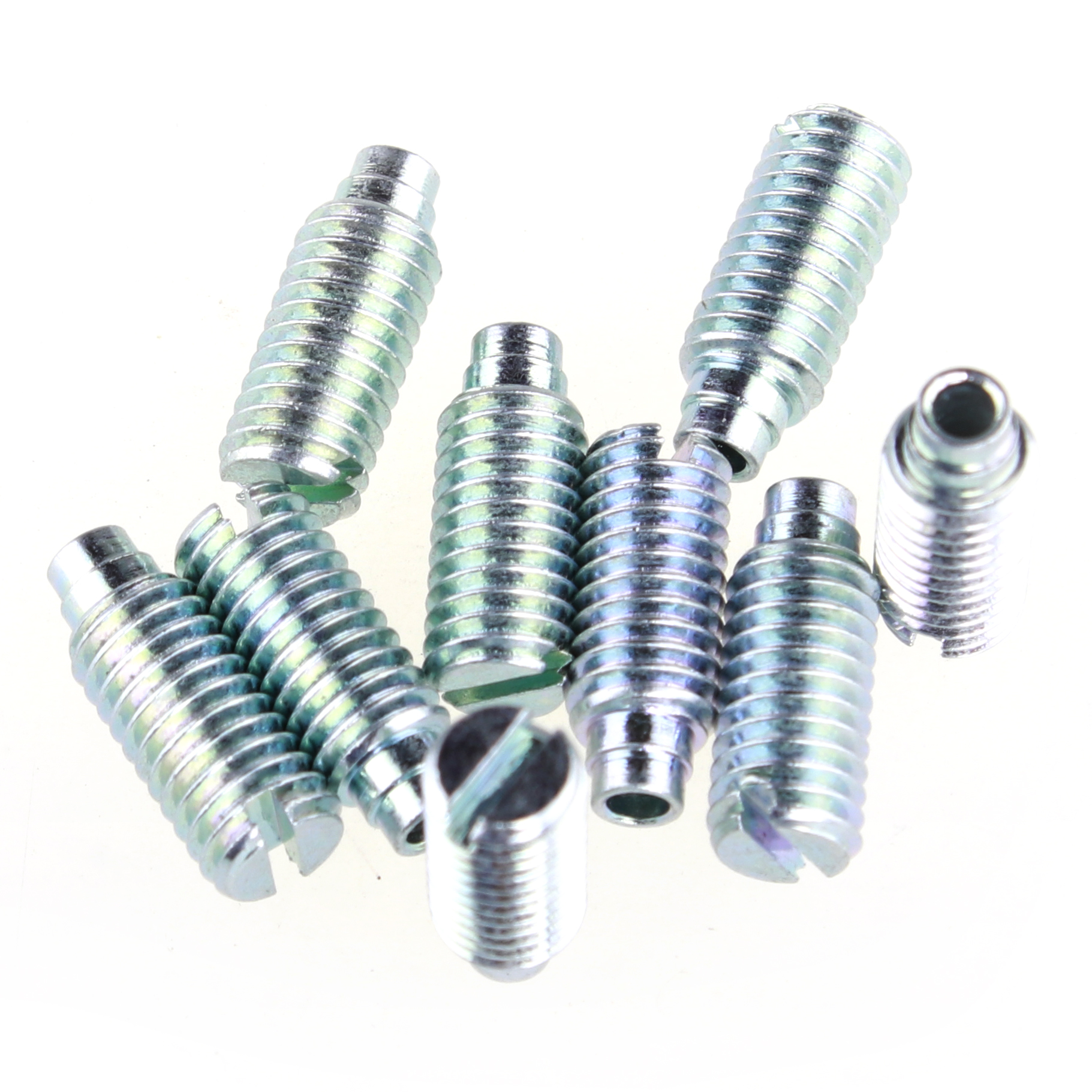
Dog point set screws have a protruding cylindrical tip that fits into a machined dimple or hole. They offer more accurate positioning and are often used when components must remain aligned after repeated assembly and disassembly.
Cone point set screws
Cone point set screws are used when the screw needs to center itself or press into a conical seat. They can provide strong locking force but may cause visible damage on smooth shaft surfaces.
Nylon tip set screws
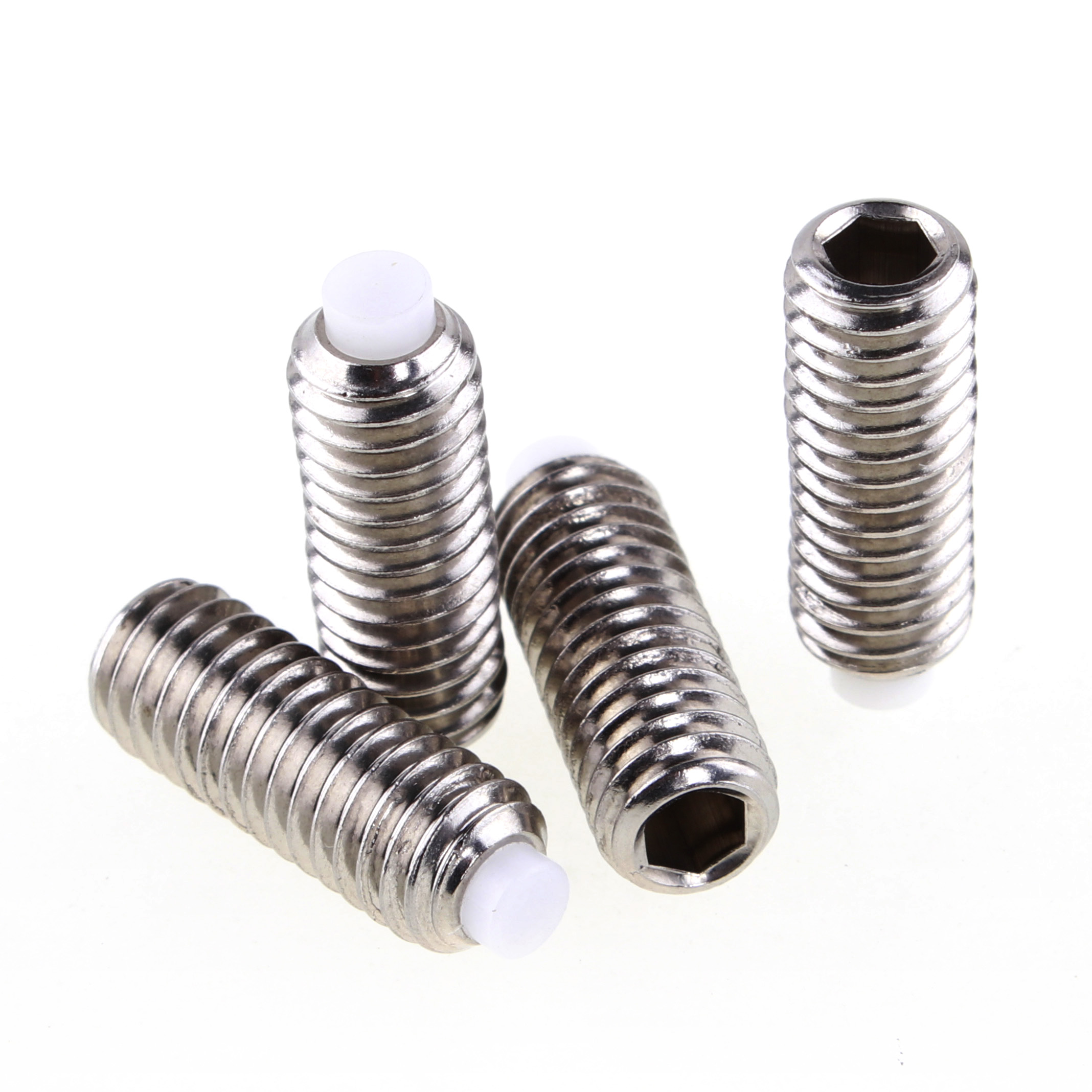
Nylon tip set screws are recommended for finished shafts, precision rollers and delicate surfaces. The nylon pad reduces metal‑to‑metal contact, helps protect shaft finish and provides certain vibration resistance.

Common Selection Mistakes for set screws
Choosing only by thread size
Many buyers select set screws based only on thread diameter and length. If the point style does not match the shaft material and locking requirement, the assembly may slip even under normal load.
Over‑tightening on small sizes
Small set screws can easily break if over‑torqued. Always follow torque values based on screw size, material and shaft hardness.
Using cup point on finished precision shafts
Cup point screws are effective for locking, but they leave indentations. If the shaft surface must remain smooth and reusable, consider nylon tip or flat point set screws instead.
Custom set screws Service
If standard set screws do not meet your assembly requirement, we can manufacture custom versions according to your drawing or sample. We support modifications to point style, thread size, length, material and surface treatment. Small‑batch trial production is available before bulk orders.
FAQ
Q1: What are set screws used for? A: Set screws are used to lock shafts, fix gears, pulleys and couplings, and maintain accurate positioning in mechanical assemblies.
Q2: Which set screws are best for preventing slipping? A: Cup point set screws are generally the first choice for anti‑rotation locking because the concave tip creates an interlocking indentation on the shaft.
Q3: Can set screws damage the shaft? A: Cup point, cone point and dog point set screws may cause indentations. If shaft surface must be protected, nylon tip or flat point versions are more suitable.